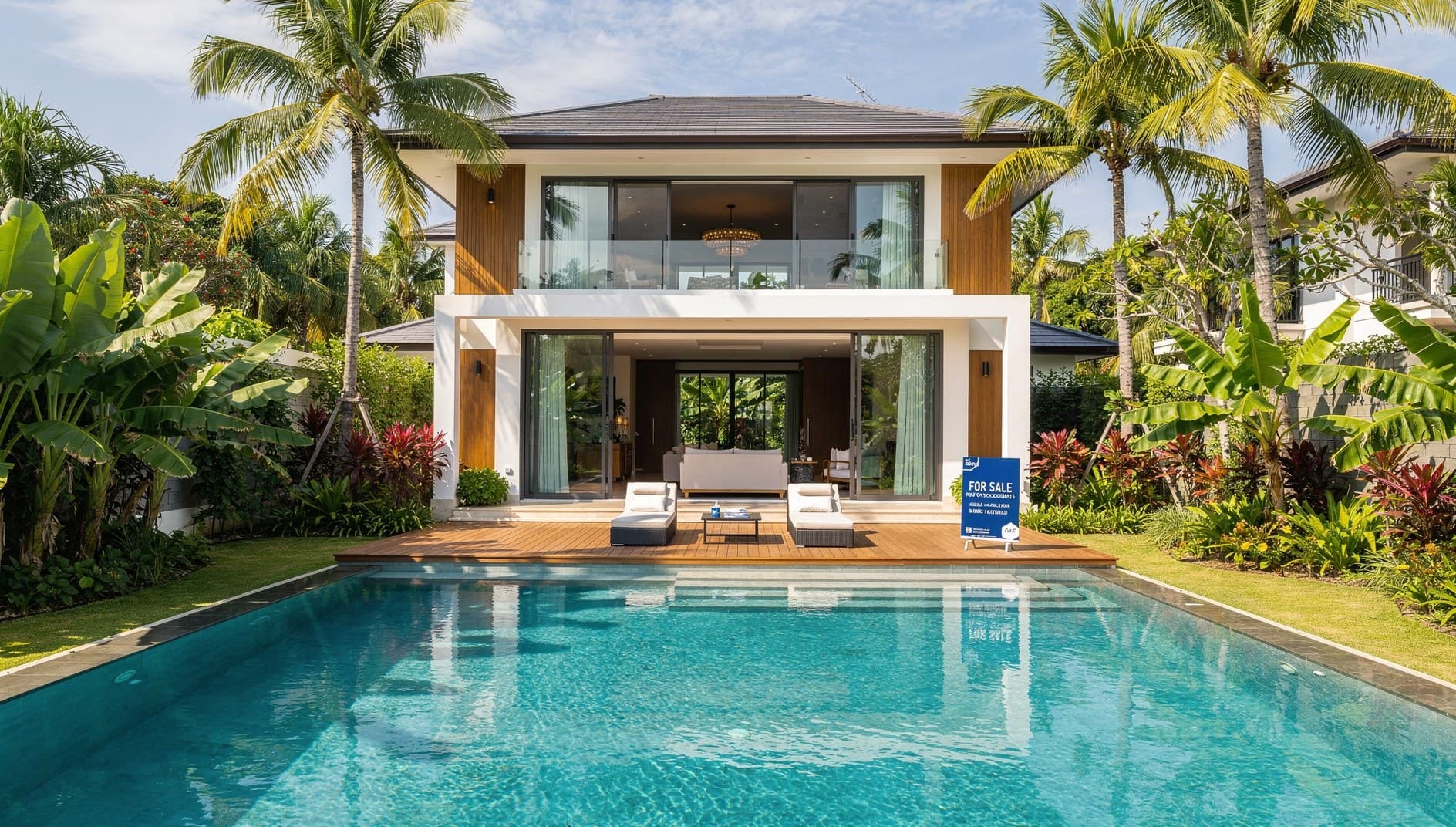
The full step-by-step process of buying property in Phuket as a foreigner: reservation, due diligence, contract, the FET money transfer, Land Office transfer and handover — and where villas differ from condos.
Buying Property in Phuket Step by Step: The Full Transaction Process
Most buyers understand what they want before they understand how the purchase actually happens. This guide walks through the transaction end to end so there are no surprises — from reservation to keys.
Quick answer
A typical Phuket condominium purchase runs: reserve → due diligence → sign the sale agreement → pay per schedule → transfer funds from abroad and obtain the FET → register ownership at the Land Office → handover. A villa on land follows a similar path but adds a legal ownership structure, because foreigners generally cannot own land outright.
Step 1 — Reservation
You place a reservation deposit to take the unit off the market and fix the price and terms. Get the reservation agreement in writing, with the price, what the deposit secures and the refund conditions if due diligence fails.
Step 2 — Due diligence
Before any large payment, verify the title, the developer and the contract. This is the step that protects your money. Use our due diligence checklist and, for an off-plan developer, the developer verification checklist.
Step 3 — Sale & Purchase Agreement (SPA)
Once due diligence is clear, you sign the SPA. Have it reviewed by an independent lawyer (not only the developer's). The SPA sets the payment schedule, completion/handover terms, penalties and what is included.
Step 4 — Payments
- Off-plan: payments follow construction milestones set in the SPA.
- Resale: typically a deposit then the balance at transfer.
Keep every payment receipt — they matter at registration and resale.
Step 5 — Transfer funds from abroad (and get the FET)
For a foreign-freehold condo, the purchase money must be remitted into Thailand from abroad in foreign currency, and the bank issues a Foreign Exchange Transaction (FET) record. You need this to register foreign ownership. See the dedicated guide: transferring money to Thailand and the FET form.
Step 6 — Transfer of ownership at the Land Office
Ownership is registered at the Phuket Land Office, where transfer fees and taxes are paid and the title is updated into your name (or your structure's name). The exact fees and who pays them are negotiated in the SPA and should be confirmed in advance — see the cost-of-buying breakdown.
Step 7 — Handover
You inspect the property (snagging), confirm any fixes, and take possession. For off-plan, check the unit against the contract specification before final acceptance.
How villas on land differ
Foreigners generally cannot own land outright in Thailand, so a villa purchase adds a legal structure (commonly a registered long lease, or a Thai company) that must be set up correctly before or alongside the steps above. Read how foreigners can buy property in Phuket.
Conclusion
The process is well-trodden, but each step has a verification task attached. Do due diligence before large payments, use an independent lawyer for the contract, and confirm the money-transfer and Land Office steps in advance.
PhuketStayPro can guide you through each step and coordinate verification before you commit. Browse listings or tell us your plans.
Notes / fact-check flags
Steps, fees, taxes, money-transfer rules and ownership structures vary by transaction and change over time, with legal consequences. This is a general overview, not legal advice — confirm the current process with the developer, the bank and an independent qualified Thai lawyer before any payment.
Need a pre-purchase check?
Phuket Stay Pro helps buyers compare areas, shortlist suitable properties, verify developers, and prepare the right legal questions before a deposit or contract signing.
Related Articles
All articlesHiring a Phuket Property Lawyer: Define the Work Before You Pay
Turn a legal-services quotation into a clear buyer mandate, evidence list and decision timetable.
One-Bedroom Plus or Two Bedrooms in Phuket: Check the Extra Room
Check privacy, circulation and actual sleeping arrangements before paying for an advertised extra room.
Poolside or Upper-Floor Condo in Phuket: Choose for Daily Use
Compare privacy, access, noise and maintenance exposure at the exact unit before choosing a floor.