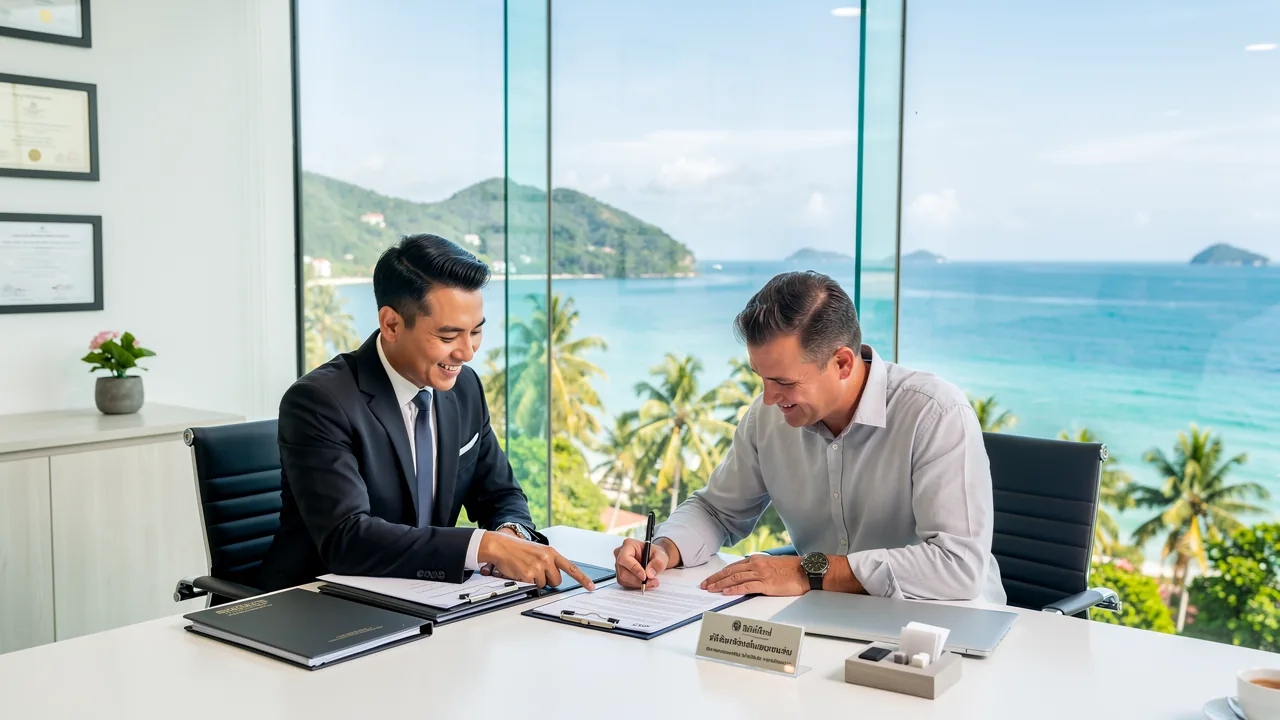
Everything foreigners need to know about buying property in Phuket in 2026: legal ownership structures, condo freehold rules, leasehold options, costs, taxes, and a step-by-step buying process.
Phuket has become one of the most sought-after real estate markets in Southeast Asia, attracting buyers from Europe, Australia, China, Russia, and the Americas. But the first question every international buyer asks is straightforward: can a foreigner actually buy property in Phuket?
The short answer is yes — but with important legal nuances. Thailand's property laws restrict direct land ownership by non-Thai nationals, yet there are several fully legal pathways that thousands of foreigners use every year to own property on this tropical island. This guide covers every option available in 2026, the costs involved, and how to protect yourself throughout the process.
Understanding Thai Property Law for Foreigners
Thailand's Land Code Act B.E. 2497 (1954) is the foundational legislation governing property ownership. Under this law, foreigners cannot own land directly in Thailand. This is a firm rule with very limited exceptions (such as Board of Investment promotions requiring a minimum 40 million THB investment, which is impractical for most buyers).
However, the law does allow foreigners to own buildings and structures on the land — just not the land itself. This distinction is the basis for every foreign ownership structure in Phuket.
What Foreigners CAN Own Directly
-
Condominium units in freehold — Under the Condominium Act B.E. 2522, foreigners can own condominium units outright, provided the total foreign ownership in the building does not exceed 49% of the total sellable area. This is true, permanent ownership — your name goes on the title deed (chanote) at the Land Department.
-
Buildings and structures — You can own the house or villa itself, just not the land it sits on. The land must be held through a lease or other structure.
What Foreigners CANNOT Own Directly
- Land — No direct freehold land ownership for foreign nationals.
- More than 49% of a condominium building — Once the foreign quota is full, additional foreign buyers must purchase under a Thai entity name or accept leasehold.
Ownership Structures Explained
1. Freehold Condominium Ownership
This is the simplest and most secure form of foreign property ownership in Thailand. When you buy a condo unit in freehold:
- Your name appears on the title deed as the owner
- You have full rights to sell, rent, bequeath, or mortgage the property
- Ownership is perpetual — there is no expiry
- You are protected by Thai law just like a Thai owner
Key requirement: The funds used to purchase the condo must be transferred from overseas in foreign currency. The receiving Thai bank will issue a Foreign Exchange Transaction Form (FETF/Thor Tor 3), which is required by the Land Department to register foreign freehold ownership. Typical transfer amounts must match or exceed the purchase price.
The 49% foreign quota is calculated by total unit area, not by number of units. In popular developments in Bang Tao or Kamala, foreign quota units often sell out quickly and may command a 10-20% premium over Thai quota units.
Price range for freehold condos in Phuket (2026):
- Studio/1-bed in developing areas: 2.5–5 million THB
- 1-2 bed in prime beach areas: 5–15 million THB
- Luxury penthouses: 15–80 million THB
2. Leasehold Ownership
For villas, houses, and land plots, leasehold is the most common structure for foreigners. Here is how it works:
- The maximum registered lease term under Thai law is 30 years
- Leases over 3 years must be registered at the Land Department to be legally enforceable
- Many developers offer a 30+30+30 year structure (90 years total), where the initial 30-year lease includes contractual options to renew for two additional 30-year periods
Important caveat about renewal options: Only the first 30-year term is registered and fully protected by law. The renewal options (the +30+30) are contractual promises that depend on the willingness and ability of the lessor to honor them. They are not guaranteed by statute. However, with a well-drafted lease agreement and a reputable developer, these structures have been used successfully for decades.
Leasehold pricing is typically 5-15% lower than equivalent freehold properties, reflecting the time-limited nature of the ownership.
3. Thai Company Structure
Some foreigners set up a Thai limited company to hold land. In this structure, the company (which is a Thai legal entity) owns the land, and the foreigner controls the company. Thai law requires that at least 51% of the company shares be held by Thai nationals.
Warning: The Thai government has periodically cracked down on "nominee" structures where Thai shareholders have no genuine involvement or investment. The Land Department and Department of Business Development have become increasingly sophisticated at identifying these arrangements. In 2025-2026, enforcement has tightened further.
If you consider this route, work only with a reputable Thai law firm that can structure the company with genuine Thai shareholders who have real capital contributions. This structure costs more (company registration, annual accounting, audits) and carries regulatory risk.
4. Thai Spouse Ownership
If you are married to a Thai national, your spouse can own land in their name. You will need to sign a declaration at the Land Department confirming that the funds used are your spouse's separate property, not marital assets. This is a straightforward process but obviously depends on your personal circumstances and level of trust.
Step-by-Step Buying Process
Step 1: Define Your Requirements and Budget
Decide on property type (condo, villa, land), location, budget, and purpose (personal use, rental investment, or both). This will determine which ownership structure is appropriate.
Step 2: Engage a Reputable Agent and Lawyer
Hire an independent property lawyer before signing anything. A good lawyer costs 30,000–80,000 THB for a standard transaction and is essential for due diligence. Your agent should be licensed and have a physical office in Phuket — avoid dealing only with online agents.
Step 3: Property Search and Viewing
Visit properties in person whenever possible. Phuket's real estate market includes off-plan (under construction), new-build, and resale properties. Each has different risk and pricing profiles.
Step 4: Reservation and Deposit
Once you find your property, you will sign a reservation agreement and pay a deposit — typically 100,000–500,000 THB (or 1-5% of the price for luxury properties). This takes the property off the market while contracts are prepared.
Step 5: Due Diligence
Your lawyer should verify:
- Title deed authenticity and type (Chanote is the strongest title)
- That the property is free of encumbrances, mortgages, or liens
- Building permits and construction licenses
- Environmental compliance
- Developer's track record and financial health (for off-plan)
- Foreign quota availability (for freehold condos)
- EIA (Environmental Impact Assessment) approval where required
Step 6: Sale and Purchase Agreement
A formal contract is drafted outlining price, payment schedule, completion date, penalties, and transfer conditions. For off-plan properties, payment is usually structured in installments tied to construction milestones.
Step 7: Payment and Fund Transfer
For freehold condo purchases, transfer funds from your overseas bank account to a Thai bank account in the buyer's name. Ensure the bank issues the FETF (Thor Tor 3) form — without this document, the Land Department will not register foreign freehold ownership.
Step 8: Transfer at the Land Department
Both buyer and seller (or their authorized representatives) attend the local Land Department office. Transfer fees and taxes are paid, documents are signed, and the new title deed is issued. The entire transfer process usually takes 1-3 hours.
Costs Breakdown: What You Will Actually Pay
| Cost Item | Amount | Notes |
|---|---|---|
| Transfer fee | 2% of appraised value | Usually split 50/50 between buyer and seller |
| Specific Business Tax (SBT) | 3.3% of appraised or actual price (whichever is higher) | Applies if seller owned < 5 years |
| Stamp Duty | 0.5% | Only if SBT does not apply |
| Withholding Tax | 1% (company) or progressive scale (individual) | Based on appraised value |
| Sinking fund | 500–1,500 THB/sqm | One-time payment for condos |
| Common area maintenance (CAM) | 40–120 THB/sqm/month | Ongoing for condos |
| Legal fees | 30,000–80,000 THB | Independent lawyer |
| Agent commission | 3-5% | Usually paid by seller |
Total transaction costs for the buyer typically range from 1.5% to 6% of the purchase price, depending on how costs are split with the seller.
Why Phuket Specifically?
Phuket stands out among Thai property markets for several compelling reasons:
-
International airport with direct flights to major cities across Asia, Europe, the Middle East, and Australia. This connectivity drives both tourism and property demand.
-
Established infrastructure — international hospitals (Bangkok Hospital Phuket, Siriroj), international schools (British International School, HeadStart, UWC Thailand), modern shopping malls, and reliable utilities.
-
Strong rental yields — Phuket properties generate 5-8% gross rental yields annually, outperforming many Western markets. The island's year-round tourist season (with peak demand from November to April) supports consistent occupancy.
-
Capital appreciation — Prime areas like Bang Tao, Layan, and Kamala have seen 5-10% annual appreciation over the past decade, driven by limited beachfront supply and growing demand.
-
Lifestyle quality — World-class beaches, dining, healthcare, and a large, welcoming expatriate community make Phuket not just an investment but a viable place to live.
-
Mature market — Unlike emerging destinations, Phuket has decades of foreign property ownership history. Legal frameworks are well-tested, professional services (lawyers, agents, property managers) are abundant, and resale markets are active.
Tips for a Safe Purchase
- Never buy without independent legal representation. Your lawyer should be separate from the developer's lawyer.
- Verify the title deed yourself at the Land Department — do not rely solely on copies.
- For off-plan purchases, use an escrow account when possible. Check the developer's previous projects — visit completed developments.
- Understand the foreign quota situation before committing to a freehold condo. If the quota is full, you may need to buy leasehold or wait for a resale.
- Keep all wire transfer documentation. The FETF form is critical for freehold registration.
- Factor in all costs — not just the purchase price, but transfer fees, taxes, furnishing, and ongoing maintenance.
- Visit Phuket before buying. Photos and virtual tours do not capture noise levels, neighborhood character, or construction quality.
Frequently Asked Questions
Can I get a mortgage in Thailand as a foreigner? Very few Thai banks offer mortgages to foreigners, and terms are generally unfavorable (higher interest rates, lower LTV ratios). Most foreign buyers pay cash or arrange financing in their home country. Some developers offer installment plans for off-plan purchases.
What happens to my property if I die? Forehold condo ownership can be inherited by your heirs, including foreign heirs, subject to the 49% quota. For leasehold properties, inheritance depends on the lease agreement terms. Having a Thai will prepared by a lawyer is strongly recommended.
Do I need to be in Thailand to buy? No. You can grant power of attorney to your lawyer to act on your behalf at the Land Department. However, visiting in person for at least the initial property selection is strongly recommended.
Is Phuket property a good investment in 2026? Phuket's property market has shown resilience and growth. Post-pandemic tourism has fully recovered, new infrastructure projects (including the planned light rail) are underway, and supply constraints in prime beachfront areas continue to support prices. As with any investment, returns depend on location, property type, purchase price, and management quality.
Conclusion
Foreigners absolutely can buy property in Phuket — and thousands do every year. The key is understanding which ownership structure fits your situation, working with qualified professionals, and conducting thorough due diligence. Whether you choose a freehold condo on Bang Tao beach or a leasehold villa in the hills of Kamala, Phuket offers a compelling combination of lifestyle, rental returns, and long-term value.
If you are considering a property purchase in Phuket, start by engaging a reputable local lawyer and an experienced agent who understands the market. The investment of time in proper preparation will protect your investment for years to come.