Ключевые выводы
- Duration: 60 days on arrival (visa exemption for many nationalities)
- Extension: 30 additional days at immigration (1,900 THB)
- Total stay: Up to 90 days per entry
- Multiple entries: Available via tourist visa from Thai consulate abroad
- Cost: Free (visa exemption) or 2,000 THB (single-entry tourist visa)
All visa options for Phuket property owners in 2026: Elite visa, retirement, investment, and work permits explained.
One of the most common questions from foreign property buyers in Phuket is: "Does buying property in Thailand give me a visa?" The short answer is no — property ownership alone does not grant you the right to live in Thailand. However, there are several excellent visa options available to property owners and investors. This guide covers every visa pathway relevant to Phuket property owners in 2026.
Does Buying Property Give You a Visa?
Let us be absolutely clear: purchasing property in Thailand does NOT automatically grant you a visa or residency permit. Unlike some countries (such as Portugal's Golden Visa or Spain's investor visa), Thailand does not have a direct property-to-visa program.
However, property ownership can support certain visa applications, and several visa categories are particularly well-suited for property investors.
Tourist Visa — The Starting Point
The simplest way to stay in Thailand, and how most property buyers begin.
Key Details:
- Duration: 60 days on arrival (visa exemption for many nationalities)
- Extension: 30 additional days at immigration (1,900 THB)
- Total stay: Up to 90 days per entry
- Multiple entries: Available via tourist visa from Thai consulate abroad
- Cost: Free (visa exemption) or 2,000 THB (single-entry tourist visa)
Best For:
- Initial property viewings and purchase process
- Short-term stays to enjoy your property
- Combining with visa runs to neighboring countries
Limitations:
- Cannot work legally in Thailand
- Must exit and re-enter for extended stays
- Immigration may question frequent border runs
Thailand Elite Visa — The Premium Choice
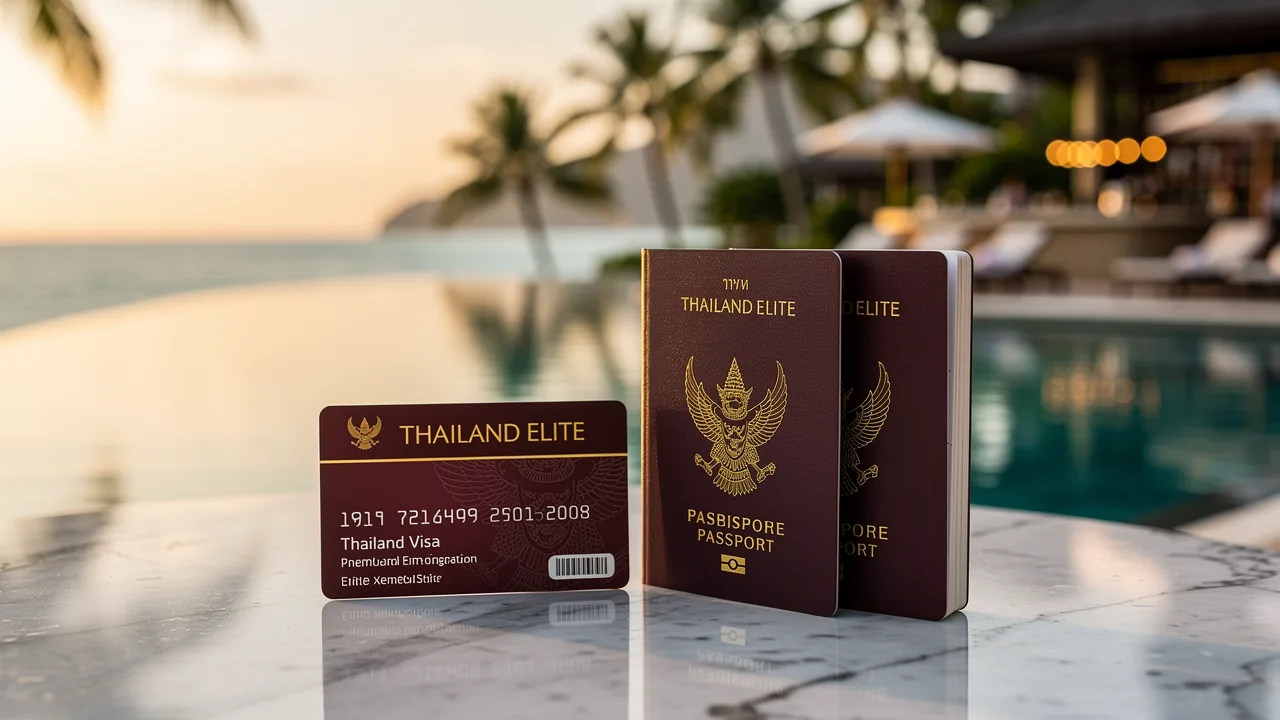
The Thailand Elite Visa (officially "Thailand Privilege Card") is the most popular long-term visa for property investors and wealthy expatriates.
Programs and Pricing (2026):
| Program | Duration | Cost (THB) | Annual Cost |
|---|---|---|---|
| Elite Easy Access | 5 years | 600,000 | 120,000/year |
| Elite Superiority Extension | 20 years | 1,000,000 | 50,000/year |
| Elite Family Premium | 5 years (family) | 800,000 | 160,000/year |
| Elite Ultimate Privilege | 20 years (VIP) | 2,140,000 | 107,000/year |
Benefits:
- Multiple unlimited entries — come and go as you please
- No 90-day reporting requirement (handled by Elite staff)
- Airport VIP services — limousine transfer, fast-track immigration
- Government concierge — assistance with banking, driving license, etc.
- Annual health checkup (premium tiers)
- Golf and spa privileges (premium tiers)
Important Notes:
- Does NOT grant work permission (but remote work for foreign companies is generally tolerated)
- Can open Thai bank accounts with Elite Visa
- Processing time: 4–8 weeks
- Can be transferred or refunded (partial) if leaving Thailand permanently
- Background check required — criminal records will disqualify applicants
Why Property Owners Love It:
The Elite Visa is the perfect complement to property ownership. It provides hassle-free long-term stays without the complexities of work permits or retirement requirements. Many PhuketStayPro clients pair their property purchase with an Elite Visa for seamless living.
LTR Visa — Long-Term Resident Visa
Introduced in 2022, the LTR Visa is Thailand's newest pathway for attracting high-net-worth individuals and skilled professionals.
Duration and Benefits:
- 10-year renewable visa
- Flat 17% income tax rate (instead of progressive rates up to 35%)
- Work permit included
- No 90-day reporting (annual reporting only)
- Fast-track airport processing
- Digital work permit — no physical card needed
Four Categories:
1. Wealthy Global Citizens
- Personal income of $80,000+/year over the last 2 years
- Investment of $500,000+ in Thai government bonds, property, or FDI
- OR total assets of $1,000,000+
2. Wealthy Pensioners
- Age 50+
- Personal income of $80,000+/year from pensions or investments
- Investment of $250,000+ in Thai government bonds or property
3. Work-from-Thailand Professionals
- Personal income of $80,000+/year
- Employment with a company with $150M+ revenue
- OR 5+ years of relevant experience
4. Highly-Skilled Professionals
- Personal income of $80,000+/year
- Employment in targeted industries in Thailand (tech, automotive, healthcare, etc.)
Why It Matters for Property Buyers:
The LTR Visa is particularly attractive because property investment in Thailand counts toward the $500,000 investment requirement for the Wealthy Global Citizens category. Buying a 15–20 million THB property could help qualify you for this visa.
Retirement Visa (Non-Immigrant O-A)
The classic long-stay option for retirees aged 50 and above.
Requirements:
- Age: 50 years or older
- Financial proof (one of the following):
- 800,000 THB deposited in a Thai bank account (maintained for 2+ months before application)
- Monthly income of 65,000 THB from abroad
- Combination totaling 800,000 THB
- Health insurance: Minimum coverage of 40,000 THB outpatient / 400,000 THB inpatient
- Clean criminal record
Duration and Renewals:
- Initial: 1 year (extendable annually)
- Must report to immigration every 90 days (or use online reporting)
- Cannot be absent from Thailand for more than 1 year (requires re-entry permit)
Practical Tips:
- The 800,000 THB can be used for a property down payment after meeting the visa deposit period
- Many retirees buy a condo and use the rental income to support their stay
- Re-entry permits (1,000 THB single / 3,800 THB multiple) are essential to maintain your visa while traveling
Education Visa (Non-Immigrant ED)
A cost-effective option for younger investors and digital nomads.
How It Works:
- Enroll in an approved educational course (Thai language, Muay Thai, cooking, etc.)
- Receive a 1-year visa, renewable quarterly
- Cost of courses: 15,000–40,000 THB/year
- Must attend scheduled classes
Important Changes in 2025–2026:
- Immigration has tightened enforcement of actual attendance
- Schools must provide monthly attendance reports
- Students who miss too many classes face visa cancellation
- Still viable but requires genuine commitment to learning
Best For:
- Property owners under 50 who want to stay long-term affordably
- Those genuinely interested in learning Thai language or culture
- Bridging visa while waiting for Elite or LTR processing
Business Visa (Non-Immigrant B) + Work Permit
For property investors who want to operate a business in Thailand.
Requirements:
- Thai registered company with 2,000,000 THB minimum capital per foreign worker
- 4 Thai employees per 1 foreign work permit
- Genuine business operations
- Annual audit and tax filing
Cost:
- Company setup: 30,000–50,000 THB
- Work permit processing: 20,000–40,000 THB
- Annual maintenance: 30,000–60,000 THB (accounting, audit)
- Social security contributions: ~750 THB/month
Best For:
- Property owners running a property management business
- Real estate agents or developers
- Those with genuine Thai business interests
Visa Strategy Matrix for Property Owners
| Profile | Best Visa | Annual Cost | Hassle Level |
|---|---|---|---|
| Investor, < 50, high income | LTR Visa | ~50,000 THB amortized | Low |
| Investor, any age, wants simplicity | Elite Visa | 50,000–120,000 THB | Very Low |
| Retiree, 50+ | Retirement O-A | ~20,000 THB (insurance) | Medium |
| Digital nomad, < 50 | Education Visa | 15,000–40,000 THB | Medium-High |
| Business owner | B Visa + WP | 80,000–150,000 THB | High |
| Short-term visitor | Tourist Visa | Free–2,000 THB | Low |
Common Mistakes to Avoid
- Assuming property purchase = visa — It does not. Plan your visa strategy separately.
- Overstaying your visa — Penalties are severe: 500 THB/day fine, potential ban, and detention.
- Working on a tourist visa — Even freelance work is technically illegal without a work permit.
- Ignoring 90-day reporting — Missing reports leads to 2,000 THB fines.
- Not getting a re-entry permit — Leaving Thailand without one cancels your visa extension.
- Choosing the wrong visa for your situation — Consult an immigration lawyer before deciding.
Conclusion
While property ownership in Thailand does not come with a visa, there are excellent options for every type of investor. The Thailand Elite Visa offers unmatched convenience, the LTR Visa provides tax benefits for high earners, and the Retirement Visa serves those 50 and above well. The key is matching your visa choice to your lifestyle, income, and long-term plans.
At PhuketStayPro, we help our clients navigate both property acquisition and visa planning. We work with trusted immigration lawyers who specialize in investor visa strategies.
Need help choosing the right visa for your Phuket lifestyle? Contact us at phuketstaypro.com for a personalized visa and property consultation.